
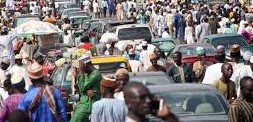
The National Bureau of Statistics (NBS), yesterday revealed reasons behind the massive poverty rocking the Africa’s most populous country, saying it is caused by deprivations in terms of health, education, living standards, work and shocks.
The NBS report further disclosed that 133 million (63 per cent) of Nigerians are suffering from multidimensional poverty, with children constituting more than half of poor people in the country.
The NBS disclosed this in the 2022 Multidimensional Poverty Index, MPI, Report launched on Thursday in Abuja.
According to vanguardngr.com, the MPI is the result of the 2022 Multidimensional Poverty Index (MPI) Survey carried out by NBS and development partners.
The survey was a collaborative effort between the National Bureau of Statistics (NBS), the National Social Safety-Nets Coordinating Office (NASSCO), the United Nations Development Programme (UNDP), the United Nations Children’s Fund (UNICEF), and the Oxford Poverty and Human Development Initiative (OPHI).
A breakdown of the dimensions of poverty used for the MPI includes: Nutrition, Food insecurity, Time to healthcare, School attendance, Years of schooling and School lag.
Others are Water, Water reliability, Sanitation, Housing materials, Cooking fuel, Assets, Unemployment, Underemployment, Security shock.
Among other things the report showed that 65% of poor people—86 million—live in the North, while 35%—nearly 47 million— live in the South.
According to the report, “multidimensional poverty is higher in rural areas, where 72% of people are poor, compared to 42% of people in urban areas.
“Approximately 70% of Nigeria’s population live in rural areas, yet these areas are home to 80% of poor people; their intensity of poverty is also higher, at 42% in rural areas compared to 37% in urban areas.
“Two-thirds (67.5%) of children aged 0–17 are poor according to the National MPI, and half (51%) of all poor people are children.”
Meanwhile, President Muhammadu Buhari has restated his unwavering commitment to eradicating poverty in the country, adding that the MPI results will be used to influence the allocation of resources going forward, particularly to target sectors where most citizens suffer deprivations.
He added that the MPI results will also serve as both a measurement and policy tool to monitor the Federal Government’s progress at achieving these goal of lifting 100 million people out of poverty within 10 years, in line with the objectives of the SDGs and the Africa Agenda 2063
Speaking at the launch of the MPI report in Abuja, President Buhari who was represented by the Chief of Staff to the President, Prof. Ibrahim Gambari, said, “This government recognises the importance of the data and the need to deploy it in sharing your story to a broad spectrum of stakeholders, both domestically and internationally.
“Internally, we have now deployed a comprehensive Data Demand and Use (DDU) strategy to embed the use of evidence-based and data driven poverty reduction mechanisms. To begin this deployment of the data, let me share seven reasons why Nigeria’s multidimensional poverty index is a powerful tool to galvanise the kind of action that will push us forward to achieving the Presidential mandate of lifting 100 million out of poverty, within the next decade:
“First, the building blocks of Nigeria’s MPI are a set of deprivations that a person experiences at the same time. They relate to dimensions like health, education, living standards, work, and security. And so, the MPI brings under one roof different Sustainable Development Goals (SDG) indicators and forms of poverty, so we can break silos and address them together.
“Secondly, Nigeria is a large and diverse country. Using the disaggregation to show the vast range in the levels of poverty, we can see the precise needs for each State or senatorial district, which will allow policymakers at that level take appropriate action.